
This Nettle, Asparagus & Pea Risotto is one of those quietly special recipes that feels like it belongs in a countryside trattoria — earthy, vibrant, and deeply seasonal. Nettles, which are at their best in early spring, bring a distinctive mineral richness that pairs beautifully with the sweetness of fresh peas and blanched asparagus. Don’t let working with nettles intimidate you; once blanched, they lose their sting entirely and transform into a silky, deeply green purée that gives this risotto its gorgeous colour and depth of flavour. Whether you’re cooking for a dinner party or a slow weekend lunch, this is a dish worth making.
Risotto Ingredients
- 2½ cups parmesan, finely grated, plus more to garnish
- 4 packed cups nettles, thick stems removed
- 1 tablespoon extra virgin olive oil
- 5 tablespoons unsalted butter
- 1½ cups finely diced yellow onion (about 1 medium onion)
- ½ bunch asparagus, diced into 1-inch pieces, tips kept intact
- 1 cup frozen peas
- 1 teaspoon kosher salt, plus more as needed
- 1½ cups Arborio rice
- ¾ cup dry white wine
- 1 teaspoon freshly grated lemon zest
- 1 tablespoon fresh lemon juice
- 5 cups homemade or low-sodium chicken or vegetable stock
- Freshly cracked black pepper, to taste
Risotto Method
Bring a large pot of well-salted water to a boil and set a large bowl of ice water nearby. Wearing gloves, strip the nettle leaves from the stems, discarding any stalks. Rinse the leaves to remove any dirt, then lower them into the boiling water and blanch until fully wilted, about 1 to 2 minutes. Use tongs or a slotted spoon to transfer them immediately into the ice bath, stirring gently until cool. Drain in a colander and squeeze out as much liquid as possible — the leaves may have a slightly slimy, kelp-like texture at this stage, which is completely normal.
Transfer the blanched nettles to a food processor along with the olive oil and pulse until mostly smooth, similar in texture to pesto, about 10 to 12 pulses. You should end up with roughly 1 cup of purée. Set aside.
Pour the stock into a saucepan and bring to a gentle simmer over medium heat. Reduce the heat to low and keep it warm throughout the cooking process — adding cold stock to risotto will slow down cooking and affect the final texture.
Melt the butter in a large, high-sided skillet over medium heat. Add the onion and salt and cook, stirring occasionally, until soft and translucent but not browned, about 7 minutes. Add the rice and stir to coat it well in the butter. Continue cooking, stirring frequently, until the edges of the rice look slightly translucent and it gives off a faintly toasty aroma, about 5 minutes.
Pour in the wine and stir until fully absorbed, about 3 minutes. Begin adding the warm stock one ladleful (roughly 1 cup) at a time, stirring often but not constantly. Wait until each addition is mostly absorbed before adding the next. Continue until the rice is cooked through and creamy but still has a slight bite — this will take around 15 to 20 minutes. You may not need all the stock; if you run short, hot water can be used to finish.
While the risotto cooks, bring a small pot of salted water to a boil. Add the asparagus and peas and cook until they turn a deep, vibrant green, about 2 to 3 minutes. Drain immediately and transfer to an ice bath to stop the cooking. Set aside, reserving a few asparagus tips for garnish.
Once the rice is cooked, stir in the nettle purée, lemon zest, and the blanched asparagus and peas. Allow everything to heat through for 2 to 3 minutes, then remove the pan from the heat. Stir in the lemon juice and grated parmesan until melted and well combined. Taste and adjust seasoning with salt and freshly cracked black pepper.
Serve immediately, topped with reserved asparagus tips and an extra grating of parmesan.
Risotto Recipe Notes
If nettles aren’t available, spinach or any dark, slightly bitter leafy green — such as watercress or dandelion greens — makes a wonderful substitute. Simply follow the same blanching and puréeing method; no gloves are needed for spinach or most other greens.
Nettles should be foraged or purchased before they go to seed, as they become bitter and coarser in texture once they’ve flowered. Early spring, before the plant flowers, is the ideal time to use them.
Risotto is best served straight from the pan. If you have leftovers, store them in an airtight container in the refrigerator for up to 2 days. Reheat gently on the stovetop with a small splash of stock or water to loosen, stirring until warmed through.
This is a great opportunity to use purple asparagus if you can find it. The deep colour pairs beautifully with the vibrant green of the nettles.
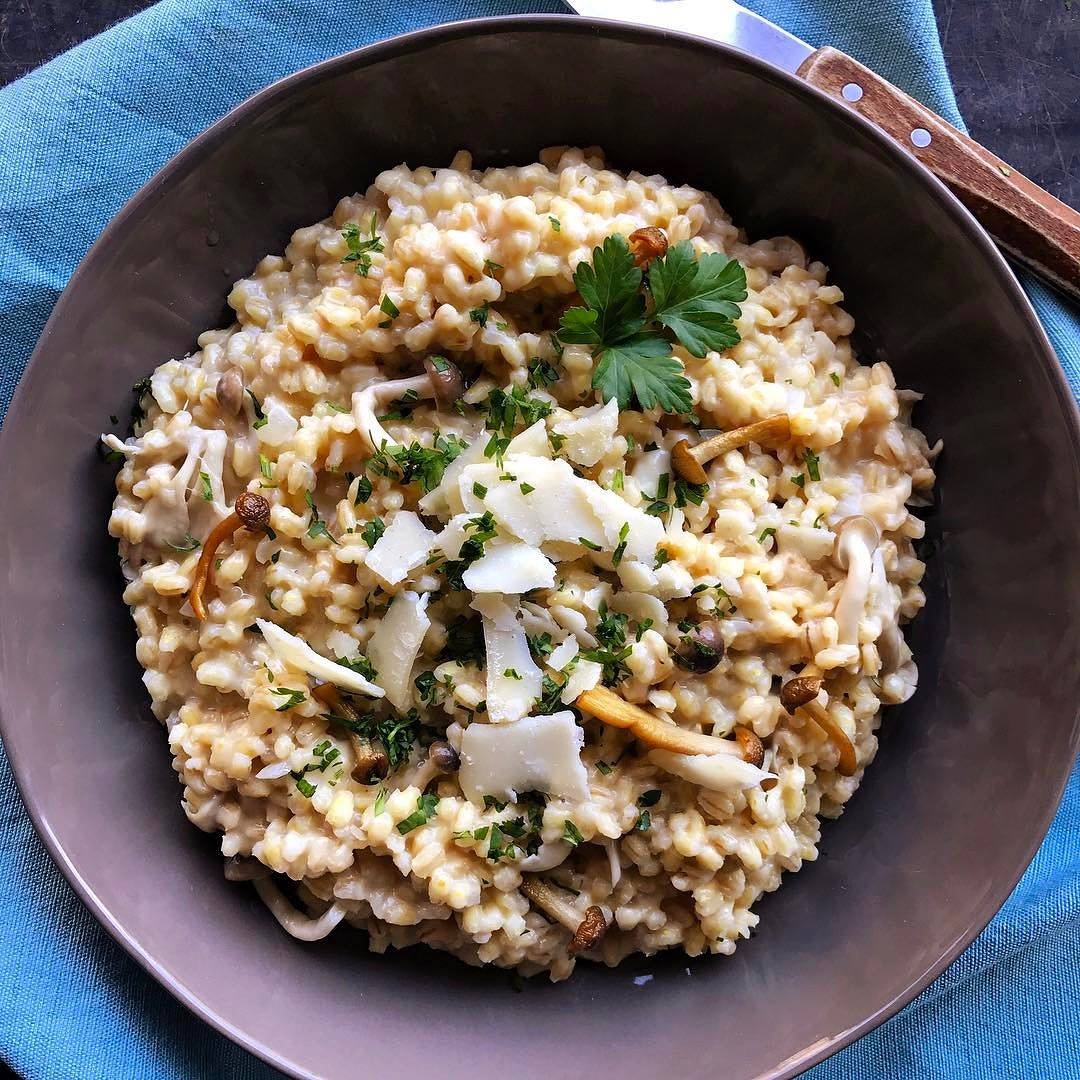
Nettle, Asparagus & Pea Risotto
This risotto is one of those quietly special recipes that feels like it belongs in a countryside trattoria — earthy, vibrant, and deeply seasonal. Nettles, which are at their best in early spring, bring a distinctive mineral richness that pairs beautifully with the sweetness of fresh peas and blanched asparagus. Don’t let working with nettles intimidate you; once blanched, they lose their sting entirely and transform into a silky, deeply green purée that gives this risotto its gorgeous colour and depth of flavour. Whether you’re cooking for a dinner party or a slow weekend lunch, this is a dish worth making.
Ingredients
2½ cups parmesan, finely grated, plus more to garnish
4 packed cups nettles, thick stems removed
1 tablespoon extra virgin olive oil
5 tablespoons unsalted butter
1½ cups finely diced yellow onion (about 1 medium onion)
½ bunch asparagus, diced into 1-inch pieces, tips kept intact
1 cup frozen peas
1 teaspoon kosher salt, plus more as needed
1½ cups Arborio rice
¾ cup dry white wine
1 teaspoon freshly grated lemon zest
1 tablespoon fresh lemon juice
5 cups homemade or low-sodium chicken or vegetable stock
Freshly cracked black pepper, to taste
Directions
- Bring a large pot of well-salted water to a boil and set a large bowl of ice water nearby. Wearing gloves, strip the nettle leaves from the stems, discarding any stalks. Rinse the leaves to remove any dirt, then lower them into the boiling water and blanch until fully wilted, about 1 to 2 minutes. Use tongs or a slotted spoon to transfer them immediately into the ice bath, stirring gently until cool. Drain in a colander and squeeze out as much liquid as possible — the leaves may have a slightly slimy, kelp-like texture at this stage, which is completely normal.
- Transfer the blanched nettles to a food processor along with the olive oil and pulse until mostly smooth, similar in texture to pesto, about 10 to 12 pulses. You should end up with roughly 1 cup of purée. Set aside.
- Pour the stock into a saucepan and bring to a gentle simmer over medium heat. Reduce the heat to low and keep it warm throughout the cooking process — adding cold stock to risotto will slow down cooking and affect the final texture.
- Melt the butter in a large, high-sided skillet over medium heat. Add the onion and salt and cook, stirring occasionally, until soft and translucent but not browned, about 7 minutes. Add the rice and stir to coat it well in the butter. Continue cooking, stirring frequently, until the edges of the rice look slightly translucent and it gives off a faintly toasty aroma, about 5 minutes.
- Pour in the wine and stir until fully absorbed, about 3 minutes. Begin adding the warm stock one ladleful (roughly 1 cup) at a time, stirring often but not constantly. Wait until each addition is mostly absorbed before adding the next. Continue until the rice is cooked through and creamy but still has a slight bite — this will take around 15 to 20 minutes. You may not need all the stock; if you run short, hot water can be used to finish.
- While the risotto cooks, bring a small pot of salted water to a boil. Add the asparagus and peas and cook until they turn a deep, vibrant green, about 2 to 3 minutes. Drain immediately and transfer to an ice bath to stop the cooking. Set aside, reserving a few asparagus tips for garnish.
- Once the rice is cooked, stir in the nettle purée, lemon zest, and the blanched asparagus and peas. Allow everything to heat through for 2 to 3 minutes, then remove the pan from the heat. Stir in the lemon juice and grated parmesan until melted and well combined. Taste and adjust seasoning with salt and freshly cracked black pepper.
- Serve immediately, topped with reserved asparagus tips and an extra grating of parmesan.
Notes
- If nettles aren’t available, spinach or any dark, slightly bitter leafy green — such as watercress or dandelion greens — makes a wonderful substitute. Simply follow the same blanching and puréeing method; no gloves are needed for spinach or most other greens.
- Nettles should be foraged or purchased before they go to seed, as they become bitter and coarser in texture once they’ve flowered. Early spring, before the plant flowers, is the ideal time to use them.
- Risotto is best served straight from the pan. If you have leftovers, store them in an airtight container in the refrigerator for up to 2 days. Reheat gently on the stovetop with a small splash of stock or water to loosen, stirring until warmed through.
- This is a great opportunity to use purple asparagus if you can find it. The deep colour pairs beautifully with the vibrant green of the nettles.
Looking For More Recipes?
Check out Salt & Honey’s Youtube channel for more recipe, meal prep, and even a behind-the-scenes look of S&H!
Need a sweet refresher? We’ve got 3! Discover a triad of healthy breakfast smoothies on our channel here!
Meal Prep Guides
Not only do we empower your recipe bank with gems like the Hot Cocoa and Beef Bourguignon but we have also developed a monthly meal prep guide. We utilize seasonal ingredients and the entire guide is centered around dishes with similar components.
Through the use of batch cooking, we want to make cooking easy, delicious and affordable. You can create the entire meal prep guide to plan your whole week or simply pick and choose which dishes resonate with you!
Make sure to check out our Youtube to find which we meal prep guide dishes we’re cooking for the week!
Our latest meal prep guide is February’s chocolate centered collection!
Additional Resources
Pinterest Board: Check out our mood board designed to provide even more inspiration for hors d’oeuvres. Here you can find more photos and videos covering our wide range of catering and event planning expertise. Whether you’re searching for food inspiration, food recipes, homemade decor, wedding planning ideas, and more, our mood boards will have your creativity soaring!
Instagram: Our feed provides a plethora of photo inspiration as well as DIY’s and tutorials on projects you can embark on at home. Whether it’s food recipes or even home decor, we will have what you’re searching for!
Substack: Monthly notes on slow living and seasonal flavors from Salt & Honey Catering and Events. Discover the recipes, garden tasks, and hosting tips that define our own event production. Here we will provide exclusive recipes, tips, and tricks only available on our free Substack!
Youtube Vlog: Ever wonder what the Catering and Event Production side of world looks like? Our “Beyond The Banquet” vlog series provides a peak through the curtain! We drop monthly short videos of the chaos and serenity behind the business. Come check it out now!