
Our Ultimate Crudité Platter is the kind of vibrant, crowd-pleasing spread that makes people think you’ve gone to a lot more trouble than you actually have. Featuring three showstopping homemade dips and a colorful array of crisp, seasonal vegetables, this modern crudité platter is equally at home as an elegant dinner party starter or the centerpiece of a lazy weekend lunch.
Jump to RecipeQuick Recipe Overview: Ultimate Crudité Platter
- Prep Time: 30 minutes
- Cook Time: 15 minutes
- Total Time: 45 minutes
- Servings: 6 to 8
- Dietary Info: Vegan, Dairy-Free, Vegetarian, Gluten-Free options
What are the 3 dips on this crudité platter?
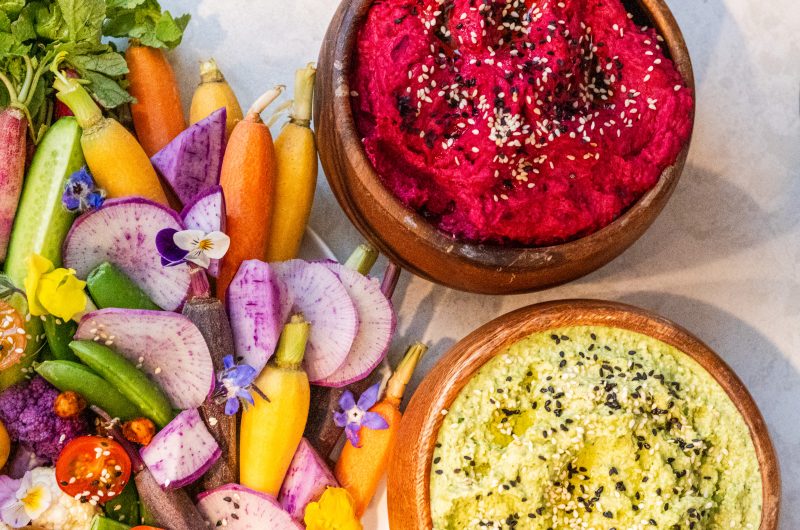
- Bright Pea & Edamame Dip: Minty, refreshing, and rich in plant-based protein, blended with tahini, garlic, and fresh lemon juice.
- Authentic Smoky Muhammara: A savory Syrian red pepper and walnut dip sweetened with pomegranate molasses and spiced with Aleppo chili.
- Jewel-Toned Roasted Beet Hummus: An ultra-smooth chickpea and caramelized beet hummus made silky with aquafaba.
What are the best vegetables for a crudité board?
For maximum color, texture, and flavor, use a balance of raw, roasted, and cooked vegetables:
- Crisp & Raw: Endive leaves, rainbow carrots, radishes (Easter and watermelon), cucumbers, mini bell peppers, cherry tomatoes, and cauliflower.
- Blanched & Tender: Green beans and sugar snap peas (blanched 1–2 minutes in boiling water).
- Cooked Elements: Boiled purple potato halves and raw or roasted yellow beet wedges.
How far in advance can you make homemade dips for a party board?
All three dips can be made up to 2 days in advance and stored in airtight containers in the refrigerator (the Beet Hummus stays fresh for up to 4 days). Bring the Muhammara and Beet Hummus to room temperature and stir a splash of ice water into the Pea Dip before serving.
Why these 3 homemade dips work together
Creating a memorable crudité platter comes down to balance, and this trio of homemade dips hits every sensory note. Instead of offering three similar chickpea- or mayo-based spreads, this combination delivers distinct flavor profiles, vibrant natural colors, and varied textures that complement both fresh and cooked market vegetables.
- Complementary Flavor Profiles: You get bright and herbaceous notes from the minty Pea & Edamame Dip, deep earthiness and natural sweetness from the caramelized Roasted Beet Hummus, and complex, smoky heat with a tart finish from the Syrian Muhammara.
- A Visual Feast (Natural Colors): The platter naturally showcases a striking palette—vibrant leaf-green, deep jewel-toned magenta, and rich terracotta red—without any artificial food coloring.
- Textural Contrast: Blending silky-smooth tahini, coarse toasted walnuts, and lightened chickpea aquafaba creates a mix of light, creamy, and textured bites that keep every dip distinct.
- Balanced Nutrition & Diets: Packed with plant-based protein from edamame, chickpeas, and walnuts, this spread is naturally vegan, dairy-free, and nutrient-dense, making it a crowd-pleasing appetizer for guests with varying dietary needs.
3 Showstopping Homemade Dips for the Ultimate Crudité Platter
This is the kind of vibrant, crowd-pleasing spread that makes people think you’ve gone to a lot more trouble than you actually have. Featuring three showstopping homemade dips and a colorful array of crisp, seasonal vegetables, this modern crudité platter is equally at home as an elegant dinner party starter or the centerpiece of a lazy weekend lunch.
Ingredients
- Pea & Edamame Dip
1 cup frozen green peas
1 cup frozen shelled edamame
3 tablespoons water
3 tablespoons tahini
1 tablespoon olive oil
Juice of ½ lemon
10 fresh mint leaves
2 garlic cloves
1 teaspoon ground cumin
½ teaspoon kosher salt
- Muhammara Dip
6 red peppers
1 cup fresh breadcrumbs
1 cup walnuts
2 tablespoons pomegranate molasses
1 tablespoon fresh lemon juice
1 tablespoon ground cumin
2 tablespoons Aleppo chilli flakes
1 tablespoon sumac
2 small garlic cloves, peeled and crushed
4 tablespoons olive oil, plus more to finish
Kosher salt, to taste
- Roasted Red Beet Hummus
3 cups cooked chickpeas, drained (canned or home-cooked)
2 cups roasted beets, diced
½ cup fresh lemon juice
½ cup tahini
1 small garlic clove, minced
4 tablespoons extra virgin olive oil
1 teaspoon ground cumin
1 teaspoon paprika
6 tablespoons aquafaba
Kosher salt, to taste
- Crudités
2 heads endive, leaves separated
1 bunch baby carrots or rainbow carrots, trimmed and halved lengthwise
1 bunch Easter radishes, halved
1 watermelon radish, thinly sliced
1 small head cauliflower, broken into florets
2 yellow beets, roasted or raw, cut into wedges
4 celery stalks, cut into sticks
4 Persian or Japanese cucumbers, halved lengthwise
6 mini Italian peppers, halved and seeded
1 cup cherry tomatoes
1 cup green beans, trimmed
1 cup sugar snap peas, trimmed
6 small purple potatoes, boiled and halved
Directions
- A Tale of Two Dips
- Start with the muhammara, as it takes the most time. Char the red peppers directly over a gas flame or under a hot grill, turning occasionally, until blackened all over. Transfer to a bowl, cover tightly with plastic wrap or a plate, and leave to steam for 15 to 20 minutes — this loosens the skin and makes them easy to peel. Once cool enough to handle, peel away the charred skin and remove the stems and seeds. Set aside.
- Meanwhile, toast the breadcrumbs in a dry skillet over medium heat, stirring frequently, until golden and crisp, about 3 to 4 minutes. Tip into a bowl and set aside. In the same pan, toast the walnuts over medium heat for 3 to 4 minutes, stirring often, until fragrant and lightly golden. Allow to cool, then transfer to a food processor and pulse until very finely chopped. Tip into a bowl and set aside.
- Place the roasted peppers, breadcrumbs, pomegranate molasses, lemon juice, cumin, Aleppo chilli flakes, sumac, garlic, and olive oil in the food processor. Season generously with kosher salt and process until smooth. Taste and adjust seasoning as needed. Transfer the pepper mixture to the bowl with the walnuts and stir well to combine. Finish with a drizzle of olive oil.
- For the pea and edamame dip, cook the peas and edamame in a saucepan of boiling water for 3 minutes, then drain well. Transfer to the food processor along with the tahini, water, olive oil, lemon juice, mint leaves, garlic, cumin, and salt. Blend until smooth and creamy. Taste and adjust seasoning — add more tahini for a creamier result, or a little more lemon for extra brightness.
- Transfer both dips to serving bowls and arrange the crudités on a large platter or board alongside. Serve immediately.
- Roasted Red Beet Hummus
- Preheat the oven to 400°F (200°C). Peel and dice the beets into roughly 1-inch pieces. Blanch in boiling water for 5 minutes, then drain well. Toss with a drizzle of olive oil and a generous pinch of kosher salt and pepper, then spread in a single layer on a baking sheet. Roast for 8 to 10 minutes, until the beets are tender and just beginning to caramelise at the edges. Remove from the oven and allow to cool completely before blending.
- Add the cooled roasted beets, chickpeas, lemon juice, tahini, garlic, olive oil, cumin, paprika, and aquafaba to a food processor. Season generously with kosher salt. Blend on high until completely smooth and creamy, scraping down the sides as needed. If the hummus seems too thick, add a little more aquafaba or a splash of cold water and blend again until you reach your preferred consistency.
- Taste and adjust seasoning with salt or a little more lemon juice as needed. Transfer to a serving bowl and finish with a drizzle of olive oil and a dusting of paprika.
Recipe Video
Notes
- Both dips can be made up to 2 days ahead and stored in separate airtight containers in the refrigerator. The pea dip may thicken slightly as it sits — stir in a splash of water to loosen before serving. Bring the muhammara to room temperature and finish with a fresh drizzle of olive oil just before serving.
- Aleppo chilli flakes have a fruity, moderately warm heat that’s central to muhammara’s character. They can be found at Middle Eastern grocery stores or online. If unavailable, a combination of mild paprika and a pinch of cayenne makes a reasonable substitute.
- Pomegranate molasses adds a sweet-sharp depth that’s hard to replicate — it’s worth seeking out and keeps well in the pantry for months. Most Middle Eastern grocery stores and many supermarkets carry it.
- Feel free to use whatever crudités look best at the market. The list above is a guide, not a rule — the goal is variety in colour, texture, and shape. Rainbow carrots, colourful cauliflower, and watermelon radishes are particularly beautiful and well worth seeking out when in season.
- For the purple potatoes, simply boil them whole in salted water until just tender, about 15 minutes, then halve and allow to cool before adding to the platter.
- Aquafaba — the liquid from a can of chickpeas — is the secret to an especially light, smooth hummus. If you’re cooking chickpeas from dried, reserve some of the cooking liquid to use in its place.
- The beets can be roasted up to 2 days ahead and kept in an airtight container in the refrigerator. This makes the hummus very quick to pull together when you need it.
- For the smoothest result, peel the chickpeas before blending — it takes a few extra minutes but makes a noticeable difference in texture. Simply pinch each chickpea between your fingers and the skin slips off easily.
- This hummus keeps well in an airtight container in the refrigerator for up to 4 days. Give it a stir before serving, and bring to room temperature for the best flavour and texture.
Looking For More Recipes?
Check out Salt & Honey’s Youtube channel for more recipe, meal prep, and even a behind-the-scenes look of S&H! In addition to the our ultimate crudité platter, we have a plethora of recipes to dive into!
Meal Prep Guides
Not only do we empower your recipe bank with gems like our easy meal prep overnight oats but we have also developed a monthly meal prep guide. We utilize seasonal ingredients and the entire guide is centered around dishes with similar components.
Through the use of batch cooking, we want to make cooking easy, delicious and affordable. You can create the entire meal prep guide to plan your whole week or simply pick and choose which dishes resonate with you!
Make sure to check out our Youtube to find which we meal prep guide dishes we’re cooking for the week!
Take a look at our July meal prep guide!
Additional Resources
Pinterest Board: Check out our mood boards designed to provide even more inspiration for hors d’oeuvres. Here you can find more photos and videos covering our wide range of catering and event planning expertise. Whether you’re searching for food inspiration, food recipes, homemade decor, wedding planning ideas, and more, our mood boards will have your creativity soaring!
Substack: Monthly notes on slow living and seasonal flavors from Salt & Honey Catering and Events. Discover the recipes, garden tasks, and hosting tips that define our own event production. Here we will provide exclusive recipes, tips, and tricks only available on our free Substack!
Youtube Vlog: Ever wonder what the Catering and Event Production side of world looks like? Our “Beyond The Banquet” vlog series provides a peak through the curtain! These short videos display the chaos and serenity behind the business. Come check it out now!
Instagram: Our feed provides a plethora of photo inspiration as well as DIY’s and tutorials on projects you can embark on at home. Whether it’s food recipes or even home decor, we will have what you’re searching for!
Catering/Event Planning: Contact us here and let’s work together to create your dream event!