
There is something genuinely magical about pulling an egg from a jar of deep purple cabbage brine or ruby beet water and finding it transformed into the most beautiful, unexpected colour.

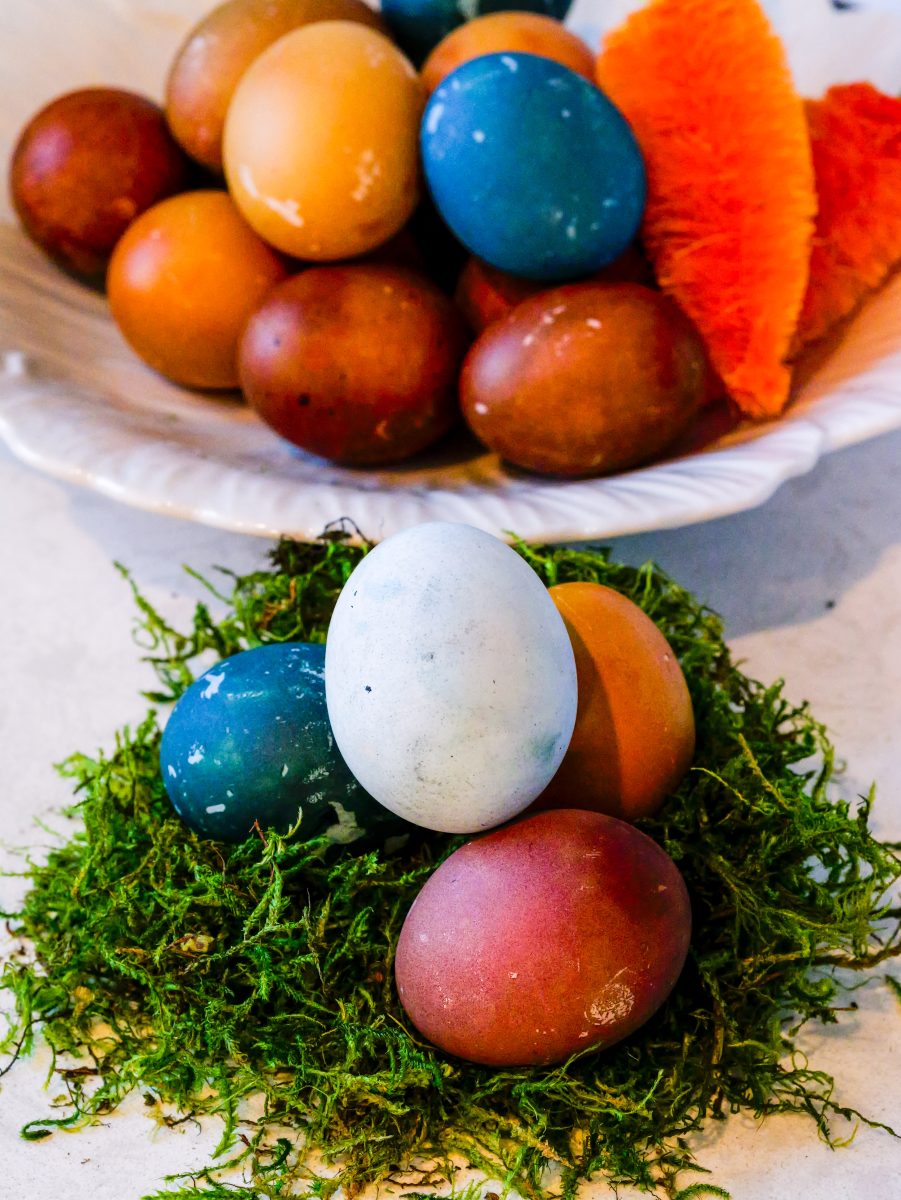


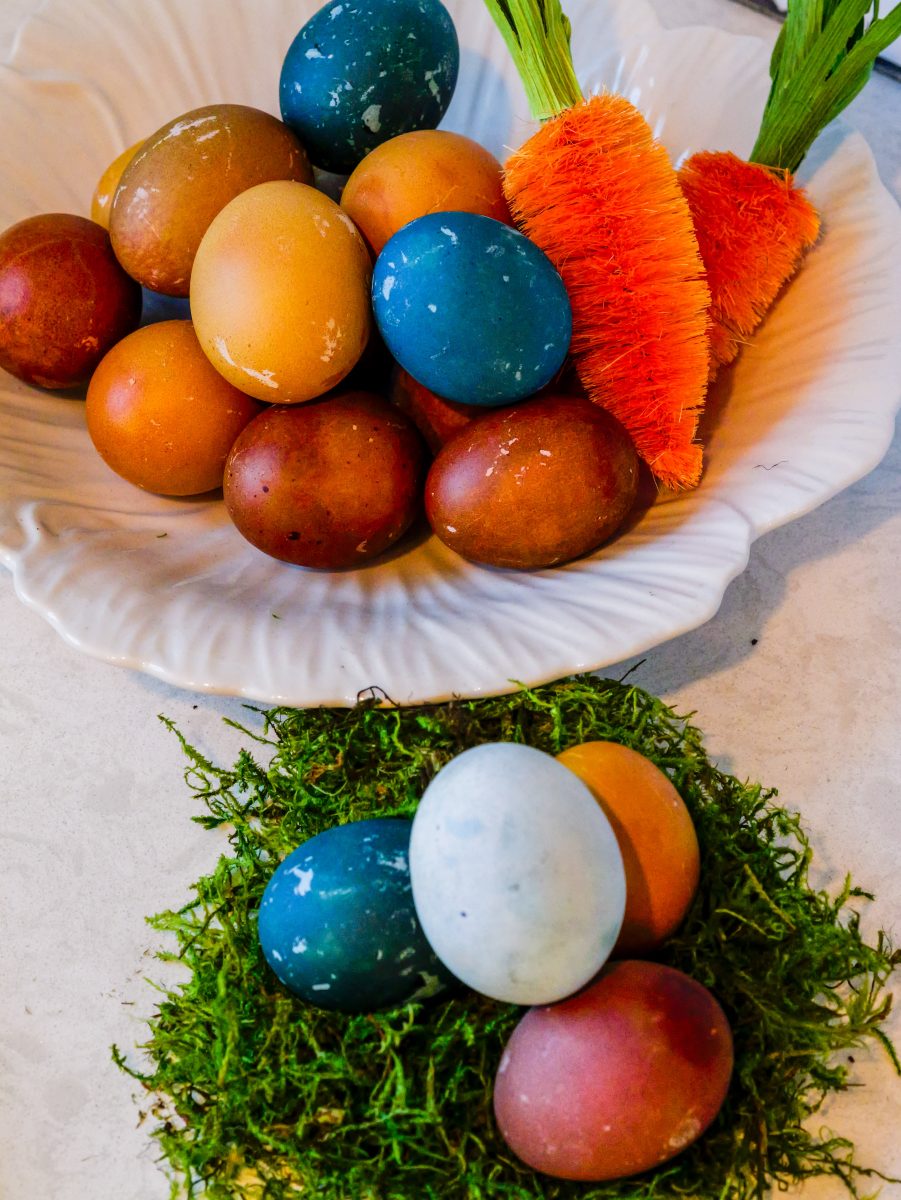
These naturally dyed Easter eggs are a wonderful alternative to synthetic dye kits — made entirely from ingredients you likely already have in your kitchen or can find at any grocery store, and completely safe to eat once you’re done admiring them.
The colours are softer and more nuanced than artificial dyes, ranging from dusty blush to deep indigo, and no two batches of naturally dyed Easter eggs ever look quite the same. It’s a slow, satisfying process — one that’s as much about the ritual as the result — and the perfect activity to do the day before Easter.
(This tutorial makes 6 Dyed Easter Eggs)

Dyed Easter Eggs – Ingredients
- 6 hard-boiled white or brown eggs, unpeeled, at room temperature
- 2 cups water, per dye bath
- Distilled white vinegar
- Neutral oil, such as vegetable or grapeseed
Dyed Easter Eggs – Dye Options
- 2 cups shredded red beets — pink on white eggs, deep maroon on brown eggs
- 2 cups red onion skins — lavender on white eggs, red on brown eggs
- 2 cups yellow onion skins — orange on white eggs, rusty red on brown eggs
- ¼ cup ground turmeric — bright yellow on any egg
- 2 cups chopped purple cabbage — blue on white eggs, green on brown eggs
- 2 cups blueberries — soft blue on any egg
- 2 cups dried hibiscus flowers — indigo or lavender on any egg
Dyed Easter Eggs – Method
Make the dye.
Combine 2 cups of water with your dye ingredient of choice in a small saucepan and bring to a boil over medium-high heat. Reduce the heat to low, cover, and simmer until the liquid is a few shades darker than you’d like your finished egg to be — this usually takes between 15 and 30 minutes. To check the colour, drip a small amount onto a white plate or piece of paper towel.
Strain and acidify.
Remove the pan from the heat and allow the dye to cool to room temperature. Pour it through a fine-mesh strainer set over a bowl or second saucepan, pressing firmly on the solids to extract as much liquid as possible. Discard the solids. Measure the strained liquid and stir in 1 tablespoon of distilled white vinegar per cup of dye — this helps the colour adhere to the eggshell.
Dye the eggs.
Place the hard-boiled eggs in a medium bowl, jar, or quart container and carefully pour the cooled dye over them, making sure they are fully submerged. Transfer to the refrigerator and leave until the eggs reach your desired colour — a few hours will give a pastel effect, while overnight produces something deeper and more saturated.
Finish and polish.
Remove the eggs from the dye and dry thoroughly with paper towels. For a richer, more vibrant result rather than a pastel one, repeat the process: dry the eggs between each soak and return them to the dye for another round. Once you’re happy with the colour, rub each egg lightly with a small amount of neutral oil and buff gently with a paper towel to bring up a soft, natural sheen. Refrigerate until ready to use. Enjoy your dyed Easter eggs!
Recipe Notes
- White eggs will produce cleaner, more true-to-colour results for your dyed Easter eggs — particularly for pastels and blues. Brown eggs absorb the dye differently, giving deeper, earthier tones that are equally beautiful but less predictable.
- The vinegar is key: it helps open the pores of the eggshell slightly, allowing the dye to penetrate more effectively. Don’t skip it.
- For the most vibrant results, make sure your dye is fully cooled before adding the eggs — hot dye can cause the whites to toughen inside the shell.
- All of the dye options listed here are completely natural and food-safe, so the eggs can still be eaten after dyeing. Store dyed eggs in the refrigerator for up to one week.
- Dried hibiscus flowers can be found at most health food shops, Latin grocery stores, or online. They produce one of the most striking colours of all — a deep, jewel-toned indigo that’s well worth seeking out.
Looking For More Recipes?
Check out Salt & Honey’s Youtube channel for more recipe, meal prep, and even a behind-the-scenes look of S&H!
Find the Elderflower Lemond Pound Cake recipe here!
Meal Prep Guides
Not only do we empower your recipe bank with gems like the Breakfast Smoothies and Beef Bourguignon but we have also developed a monthly meal prep guide. We utilize seasonal ingredients and the entire guide is centered around dishes with similar components.
Through the use of batch cooking, we want to make cooking easy, delicious and affordable. You can create the entire meal prep guide to plan your whole week or simply pick and choose which dishes resonate with you!
Make sure to check out our Youtube to find which we meal prep guide dishes we’re cooking for the week!
The latest meal prep is our March Lego Meal Prep!
Additional Resources
Pinterest Board: Check out our mood board designed to provide even more inspiration for hors d’oeuvres. Here you can find more photos and videos covering our wide range of catering and event planning expertise. Whether you’re searching for food inspiration, food recipes, homemade decor, wedding planning ideas, and more, our mood boards will have your creativity soaring!
Instagram: Our feed provides a plethora of photo inspiration as well as DIY’s and tutorials on projects you can embark on at home. Whether it’s food recipes or even home decor, we will have what you’re searching for!
Substack: Monthly notes on slow living and seasonal flavors from Salt & Honey Catering and Events. Discover the recipes, garden tasks, and hosting tips that define our own event production. Here we will provide exclusive recipes, tips, and tricks only available on our free Substack!
Youtube Vlog: Ever wonder what the Catering and Event Production side of world looks like? Our “Beyond The Banquet” vlog series provides a peak through the curtain! We drop monthly short videos of the chaos and serenity behind the business. Come check it out now!